
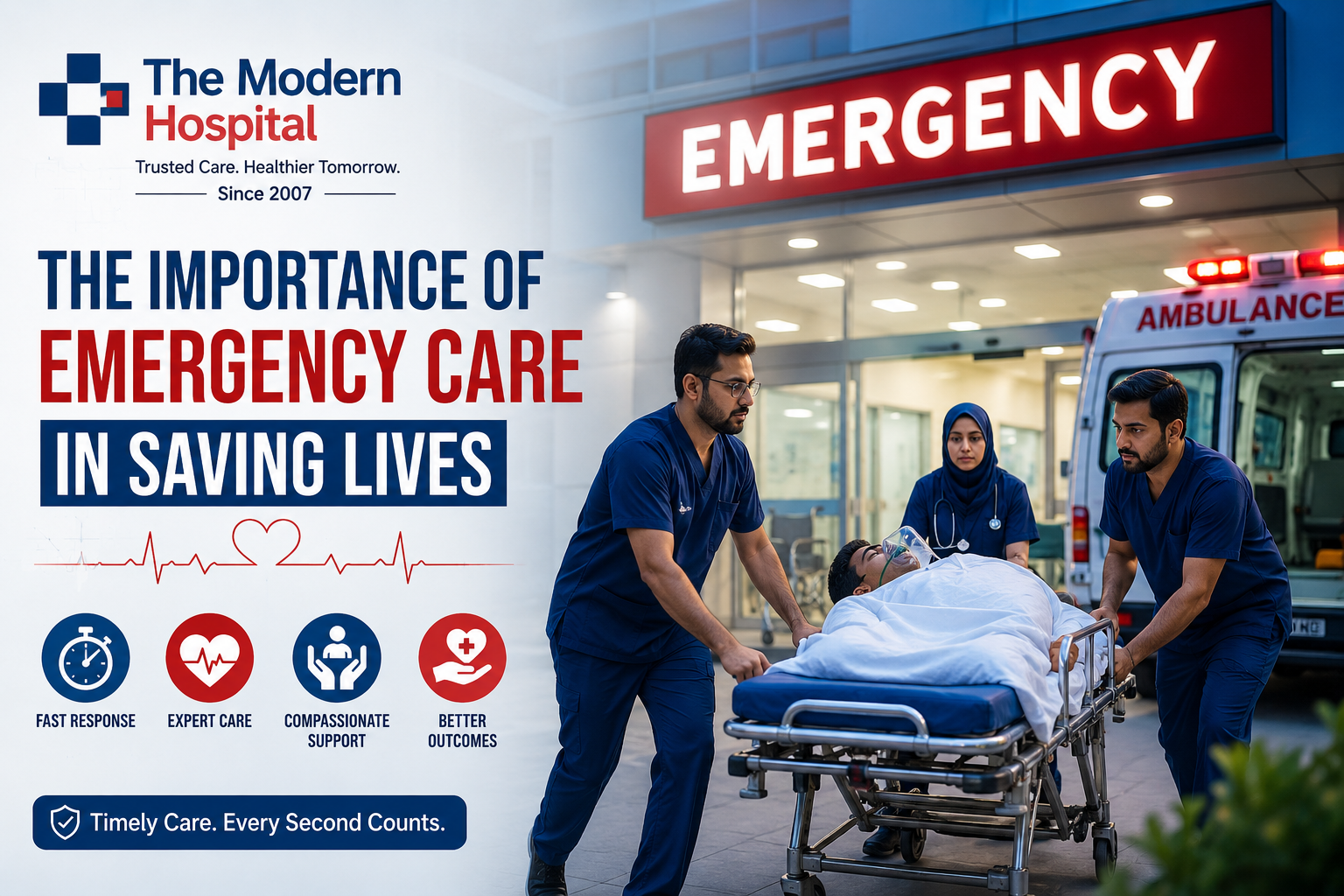
Medical emergencies can happen suddenly, often when families least expect them. In such moments, timely medical attention can make a major difference in patient outcomes. The Modern Hospital, a trusted healthcare network established in 2007, serves communities across Karachi, Hyderabad, Sukkur, Gharo, Mirpurkhas, and Islamkot with patient-focused medical services. Emergency care is not only about treating serious injuries or sudden illness; it is about quick assessment, safe decision-making, and providing the right support when every minute matters.
What Is Emergency Care?
Emergency care refers to immediate medical attention provided to patients facing urgent health conditions. These conditions may include chest pain, breathing difficulty, severe injuries, high fever, stroke-like symptoms, uncontrolled bleeding, sudden weakness, allergic reactions, or accidents.
The main goal of emergency care is to assess the patient quickly, stabilize the condition, and decide the next step of treatment. This may involve diagnostic tests, medication, oxygen support, wound care, specialist consultation, or hospital admission if needed.
In Pakistan, where families often travel with patients from homes, workplaces, schools, or highways, emergency departments play an important role in connecting patients with timely healthcare.
Why Timely Emergency Care Matters
During a medical emergency, delays can increase the risk of complications. For example, a person experiencing severe chest pain may need immediate evaluation to rule out a heart-related problem. A child with breathing difficulty may require urgent support before the condition worsens. Similarly, accident victims may need quick bleeding control, pain management, and diagnostic imaging.
Timely emergency care can help in:
- Identifying serious health problems early
- Reducing the risk of complications
- Providing pain relief and initial treatment
- Stabilizing patients before further care
- Guiding families about the next medical steps
- Coordinating with specialists when required
Emergency care does not guarantee a specific outcome, but it gives patients a better chance of receiving appropriate medical attention at the right time.
Common Situations That Need Emergency Attention
Many people are unsure when to visit an emergency department. Some symptoms should not be ignored, especially if they appear suddenly or become severe.
Seek urgent medical help if someone experiences:
- Chest pain, pressure, or discomfort
- Sudden shortness of breath
- Loss of consciousness or fainting
- Severe headache with confusion or weakness
- Stroke-like symptoms, such as facial drooping or difficulty speaking
- Serious road traffic accident or fall
- Heavy bleeding that does not stop
- Severe abdominal pain
- Burns, electric shock, or poisoning
- High fever in infants or elderly patients
- Seizures
- Severe allergic reaction with swelling or breathing difficulty
When in doubt, it is always safer to seek medical advice rather than wait too long at home.
Emergency Care for Families and Children
Parents often face stressful decisions when a child becomes suddenly ill. Children may not always explain their symptoms clearly, which makes early medical assessment important. Warning signs such as persistent vomiting, difficulty breathing, dehydration, unusual sleepiness, high fever, severe pain, or injury after a fall should be taken seriously.
For families, emergency departments provide quick evaluation and guidance. Doctors and nurses assess vital signs, check symptoms, and decide whether the child needs medication, observation, tests, or referral to a specialist. This helps parents make informed decisions instead of relying only on home remedies or guesswork.
The Role of Diagnostic Support in Emergencies
Emergency care often depends on fast and accurate diagnosis. In many cases, doctors need tests to understand the patient’s condition. These may include blood tests, ECG, X-rays, ultrasound, CT scan, or other investigations depending on the symptoms.
Diagnostic support helps healthcare professionals:
- Confirm or rule out serious conditions
- Monitor infection, bleeding, or organ function
- Identify fractures or internal injuries
- Evaluate heart-related symptoms
- Plan safe and timely treatment
Hospitals that provide diagnostic support alongside emergency care can help patients receive more coordinated medical attention.
How Emergency Teams Work
Emergency care is a team effort. Doctors, nurses, technicians, reception staff, and support teams work together to manage patients quickly and safely. The process often begins with triage, where patients are assessed based on the severity of their condition.
Patients with life-threatening symptoms are usually prioritized first. Others may be examined according to urgency. This system helps ensure that critical cases receive immediate attention while all patients are guided through the care process.
A professional emergency team also communicates with families, explains the condition, and recommends the next steps clearly. This is especially important during stressful situations when families need reassurance and practical guidance.
Why Choosing the Right Hospital Matters
During emergencies, families need a healthcare facility that is accessible, organized, and equipped to respond quickly. A hospital with experienced doctors, trained staff, diagnostic facilities, and emergency support can make the care process smoother and more reliable.
What Families Can Do Before an Emergency Happens
While emergencies cannot always be predicted, families can prepare themselves in simple ways:
- Keep emergency contact numbers saved
- Know the nearest hospital location
- Keep medical records and prescriptions organized
- Inform family members about allergies or chronic illnesses
- Keep a basic first-aid kit at home
- Do not delay care for serious symptoms
- Avoid giving unnecessary medicines without medical advice
- Follow doctor recommendations after emergency treatment
Preparation can reduce panic and help families respond more calmly when urgent situations occur.
Conclusion
Emergency care plays a vital role in saving lives by providing timely assessment, stabilization, and medical support during critical situations. Whether it is chest pain, breathing difficulty, injury, high fever, or sudden weakness, quick action can help patients receive the care they need before complications increase.
For families in Pakistan, understanding when and where to seek emergency care is an important part of health awareness. Hospitals with trained emergency teams, diagnostic support, and compassionate care can guide patients and families through difficult moments with greater confidence.